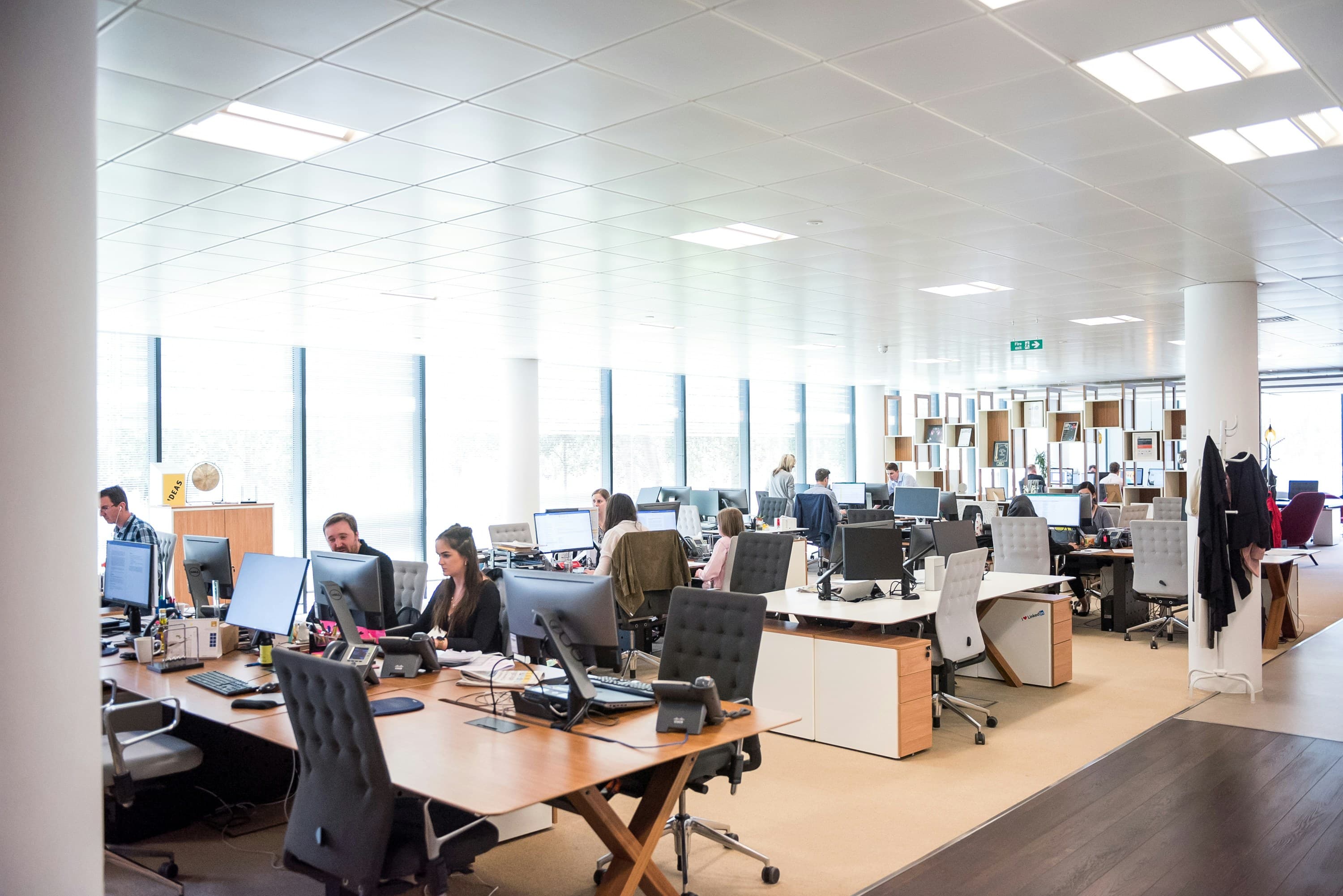
Technically, no. NYC, San Francisco, and Boston all classify office buildings as commercial use, and sleeping in one without a permitted change of use is a zoning violation. That said, plenty of founders explore this to cut costs early on. The short answer: don't do it covertly, but there are legitimate adjacent options — live/work zoning, artist lofts — worth understanding before you sign anything.
---
Why Founders Ask This Question
It comes up more than you'd expect. You're paying $3,500/month for an apartment and another $4,000/month for a small office. At some point, the math starts to feel absurd — especially pre-revenue or right after a seed round when every dollar matters.
Consolidating both costs into one space sounds appealing. But before you start calculating whether your SoMa loft or Flatiron floor-through could double as a crash pad, you need to understand what "living in office space legally" actually requires. The answer depends heavily on zoning, your lease terms, and local building codes.
In U.S. real estate, zoning ordinances divide land into use categories: residential, commercial, industrial, and mixed-use. Standard office space sits in commercial zones. Using it for sleeping, cooking, or other residential activities without a permit or approved zoning variance is a code violation in virtually every U.S. jurisdiction — including all three cities.
That said, live/work zoning is a real category in NYC, SF, and Boston. Some buildings are explicitly licensed for dual use. The key word is legally: spaces designed for this purpose exist. You just can't retrofit a standard office lease into a legal dwelling without city approval.
Live/work zoned buildings are also incredibly limited. These are typically properties grandfathered into a special mix-use permitting. New builds are almost always precluded from such zoning allowances.
For most founders, the more practical takeaway is simpler: find the right office at the right price and keep your housing separate. If you're truly budget-constrained, shared spaces on platforms like Tandem can bring your monthly office cost down significantly without the legal exposure.
---
Zoning and Legal Restrictions in NYC, SF, and Boston
Each city treats residential use of commercial space differently, but the baseline is consistent: unauthorized occupancy is illegal and carries real consequences.
NYC
New York City's Zoning Resolution is one of the most detailed in the country. Commercial office space — Midtown, Flatiron, Financial District — is zoned for business use, not habitation. Living in it without a Certificate of Occupancy that permits residential use violates both the zoning code and the NYC Building Code.
The Department of Buildings can issue violations, require you to vacate, and impose fines. And your landlord's lease almost certainly prohibits residential use already — a violation that could trigger eviction and cost you your deposit.
The exception is loft conversion buildings in Tribeca, SoHo, and DUMBO, where some units have been legally converted to live/work status under the NYC Loft Law. These are explicitly permitted for residential occupancy. But they're categorically different from standard office leases — and increasingly rare and expensive.
San Francisco
SF's Planning Code likewise prohibits residential use of commercial office space. SoMa, the primary tech startup neighborhood, is zoned primarily for Production, Distribution, and Repair (PDR) or commercial office use. The city does have a dedicated live/work designation — often called "artist lofts" — in neighborhoods like the Mission, Dogpatch, and SoMa, but those units have their own eligibility criteria and are regulated under the Planning Code. Getting caught dwelling in a commercially leased space can trigger complaints, inspections, and loss of your lease.
Boston
Boston follows the same logic. The Boston Zoning Code designates most office space as Business, General, or Industrial use. Living in those spaces without a Conditional Use Permit or variance isn't legal. The Seaport and Back Bay — common startup corridors — are commercial zones, full stop.
---
The Lease Itself Is Usually the First Obstacle
Even before zoning becomes an issue, your lease gets in the way. Commercial office leases almost universally include a permitted use clause that limits how the space can be used.
A typical clause reads something like: "Tenant shall use and occupy the Premises solely for general office purposes and for no other purpose." Sleeping there, storing personal belongings overnight, or using it as a primary dwelling would likely violate this clause outright.
The consequences are real. Your landlord can terminate the lease for cause, you lose your security deposit (3–6 months' rent in NYC, 2–3 months in SF), and you may face liability for any code violations triggered by the unauthorized use.
Subleases and shared space agreements work the same way — the original lease governs everything, and the host company takes on liability for how you use the space.
Read the permitted use clause before you sign anything. And if you're hoping to negotiate something unusual, it's worth reading how to rent office space as a startup so you know what's actually on the table in startup office leases.
---
What Legal Live/Work Space Actually Costs
If you're seriously considering a live/work arrangement through a properly permitted building, here's what the pricing looks like versus standard commercial space.
NYC
Legal live/work lofts in NYC — mostly in SoHo, NoHo, Tribeca, and DUMBO — carry a significant premium. Expect $80–$120+/sqft/year in desirable Manhattan neighborhoods, compared to $55–$75/sqft/year for standard Flatiron or Chelsea office space. Supply is extremely limited. These units move fast and often trade off-market.
San Francisco
SF's live/work and artist loft inventory is concentrated in the Mission, Dogpatch, and SoMa. Pricing runs $40–$65/sqft/year in the Mission, higher in Dogpatch as the neighborhood has gentrified. Standard SoMa office space is $55–$80/sqft/year depending on the building and term. The cost premium for legal live/work can be modest if you find the right building — but the search takes longer.
Boston
Boston has less distinct live/work inventory than NYC or SF. Some mixed-use buildings in the South End and Seaport accommodate dual use, but they're priced as premium residential with office allowances — not as discounted office space. Expect $60–$90/sqft/year or more in those corridors.
The honest math rarely works in favor of live/work as a cost-saving strategy. Standard private office leases are almost always cheaper per square foot than permitted live/work space, and they're far easier to find.
---
What to Do Instead If You're Trying to Cut Office Costs
If the real goal is reducing overhead, there are better levers than trying to live in office space.
Right-size your lease. The SBA's guidance on choosing a business location emphasizes matching space to actual operational needs, not aspirational headcount. At 120–150 sqft per person, a team of six needs roughly 720–900 sqft. That's a manageable monthly cost in most startup neighborhoods.
Consider shared spaces. Tandem's platform includes some shared spaces where one company hosts a small second team, often month-to-month with lower deposits. It feels private — you're not in a coworking bullpen — but the economics are closer to flexible leasing than a traditional office lease.
Negotiate hard on term and deposit. In SF, a 12-month private lease with a 2-month deposit is achievable for well-capitalized startups. In NYC, a Good Guy Guarantee can cap your deposit exposure at roughly 3 months. Leverage matters, and Tandem handles negotiation as part of the process at no cost to the tenant.
Look at neighborhoods where you have pricing leverage. In NYC, NoMad and Chelsea typically run $5–$10/sqft/year less than Flatiron for comparable space. In SF, the Mission and SoMa offer real discounts versus core markets like the FiDi or Jackson Square. You can browse private offices on Tandem to compare what's available across neighborhoods right now. The U.S. Census Bureau's commercial real estate data tracks vacancy rates and lease trends — useful context when you're deciding whether to push on rent or take the deal in front of you.
---
How to Find Office Space That Actually Fits Your Budget
The fastest path to a legal, affordable private office is working with a platform that already knows the inventory.
Tandem operates in NYC, San Francisco, and Boston — sourcing private leases, subleases, and shared spaces for early-stage teams. You can browse private offices on Tandem to see what's available in your target neighborhood, filter by size and price, and book tours. Tandem handles the LOI, lease negotiation, and landlord coordination. Free for tenants.
If you're starting from scratch on the leasing process, the most important thing is understanding what you're signing before you sign it. A commercial office lease is a multi-year financial commitment. The permitted use clause, deposit structure, and hidden costs matter as much as the headline rent number. Go in knowing what's negotiable.
---
Last updated: July 2026