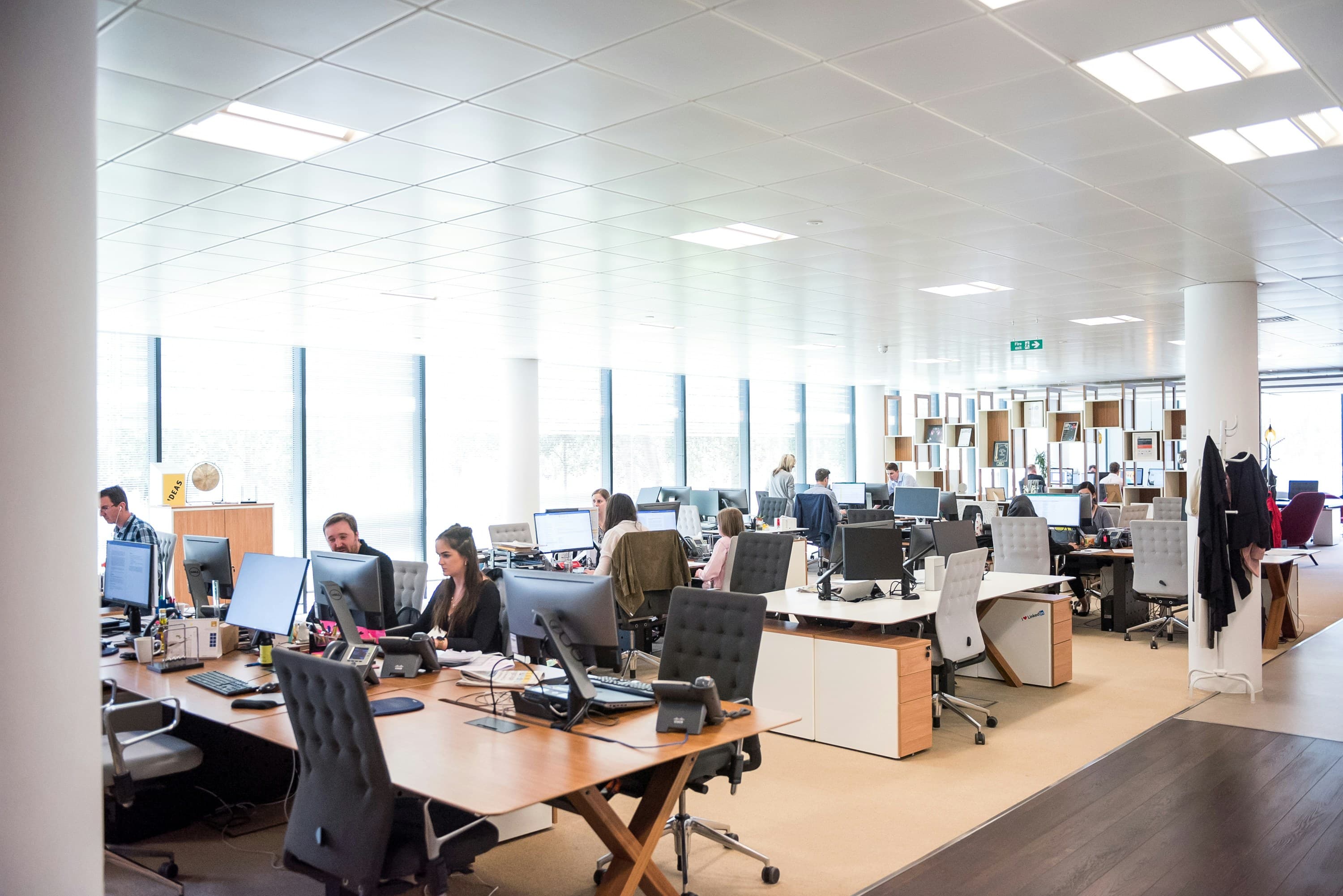
Class A office space NYC typically rents for $80–$150+ per square foot per year depending on submarket and building quality, with Trophy towers going even higher. That's well above the $64/sqft median for startup-sized Manhattan suites in Tandem's H1 2026 NYC Market Report, because most startup suites are in Class B and boutique loft buildings. For a 2,000 sq ft office, that's roughly $13,000–$25,000/month. The market has shifted sharply since 2023: Class A vacancy is tightening while Class B/C sits empty. That dynamic — called "flight to quality" — gives Class A landlords real leverage. If you're considering a Class A lease, move faster than you think you need to.
---
Is Class A Office Space in NYC Worth It for Startups?
For some growth-stage startups, yes: typically Series B teams, or Series A teams that host enterprise clients or recruit senior executives. For most seed and Series A teams, a well-chosen Class B building is the better value. Either way, the math has to work.
Class A office space in NYC isn't just a prestige play. Since 2023, the flight to quality trend has fundamentally reshaped Manhattan's office market. Startups returning teams to the office are choosing newer, better-amenitized buildings over cheaper alternatives, and they're willing to pay for it.
The business case is pretty concrete. Better buildings drive better return-to-office rates. U.S. Bureau of Labor Statistics time-use data from 2024 found that commute friction and workplace quality rank among the top reasons employees resist coming in. A Class A lobby, functioning HVAC, and real common areas move the needle in ways a fifth-floor walkup in a 1960s building simply can't.
That said, Class A isn't a monolith. There's a meaningful difference between a renovated Class A building in NoMad and a brand-new Trophy tower in Hudson Yards. Understanding those distinctions — and which one actually fits your team — is what this guide is for.
If you already know a Class A building you want to lease office space in, read How to Lease Office Space for a full breakdown of how office leasing works for startups.
---
What Exactly Qualifies as Class A — and How Is It Different from Trophy?
The BOMA International classification system defines Class A as buildings that represent "the most prestigious competing for premier office users, with rents above average for the area." In practice, that means:
- Built or substantially renovated within the last 20–30 years
- Professional management and 24/7 security
- Modern mechanical systems (HVAC, elevators, electrical)
- High-quality lobby finishes and common areas
- Typically 10+ stories in Manhattan
Trophy buildings are a subset of Class A — the top 5–10% of inventory. Think One World Trade Center, 30 Hudson Yards, and the Seagram Building on Park Avenue. Trophy buildings command $150–$250+/sqft/year and come with tenant-only fitness centers, conference facilities, rooftop terraces, and concierge services.
Class A vs. Class B vs. Class C
|
Class |
Typical Age |
Rent Range (NYC, $/sqft/yr) |
Amenities |
Ideal For |
|---|---|---|---|---|
|
Trophy |
New / Iconic Renovation |
$150–$250+ |
Premium — gym, rooftop, concierge |
Enterprise, finance, law |
|
Class A |
<30 yrs or renovated |
$80–$150 |
Modern lobby, good HVAC, professional mgmt |
Growth-stage startups, scale-ups |
|
Class B |
30–50 yrs, light reno |
$50–$75 |
Functional but dated |
Seed through Series A startups, cost-sensitive |
|
Class C |
50+ yrs, minimal updates |
$30–$50 |
Basic |
Price-first tenants |
For Series B startups in Flatiron, Hudson Square, or NoMad, and for Series A teams with heavy client or recruiting traffic, Class A hits the right balance: professional enough to impress investors, modern enough to retain engineers, and affordable enough to justify the lease.
---
What Does Class A Office Space Cost Per Submarket Right Now?
Rents vary a lot by neighborhood. Here's where things stand as of early 2026.
Midtown (Plaza District / Park Avenue Corridor)
One of the most expensive corridors in the city. Class A office rent here runs $95–$130/sqft/year, and Trophy towers on Park Avenue run $150+. Vacancy is tighter than post-pandemic projections suggested — large blocks are being absorbed faster than at any point since 2019.
Hudson Yards
New construction commands a premium: $130–$200+/sqft/year for Class A and Trophy space. Major financial firms and tech companies anchor the tenant mix. For a 2,500 sq ft startup lease, budget north of $27,000/month.
Hudson Square / SoHo / NoHo
A fast-moving creative-tech submarket. Class A rents land between $85–$120/sqft/year, with renovated loft-style buildings pulling in design, media, and software companies. Inventory is tight — good spaces go fast.
NoMad / Flatiron / Union Square
The heart of NYC's startup scene. Class A rents here run $80–$110/sqft/year, with strong transit access (N/Q/R/W, 4/5/6, L) and dense startup infrastructure. Browse offices for rent in New York City to see what's available.
Financial District / Lower Manhattan
FiDi has repositioned meaningfully since 2020. Newly renovated Class A product runs $80–$95/sqft/year, the low end of Manhattan Class A and a real discount versus Midtown, with improving amenities and strong transit. If you don't need the Flatiron address, there's genuine value here.
Downtown Brooklyn / DUMBO
Not traditional Class A territory, but new waterfront construction has pushed quality up. Expect $55–$80/sqft/year for the best product — lower than Manhattan, with a tradeoff on prestige and investor proximity.
---
What Is "Flight to Quality" — and Why Does It Matter for Your Search?
Flight to quality describes a market-wide shift where tenants upgrade to better buildings even when they're cutting square footage. Since 2023, this trend has defined NYC's commercial real estate recovery in ways that cut against the "office is dead" narrative.
The data backs it up. Class A office space in NYC has absorbed net positive square footage every quarter since mid-2023, while Class B and C vacancy keeps climbing. According to NYC's Department of City Planning, Manhattan's office inventory is going through its most significant quality bifurcation in decades. Here's what that means for you:
- Class A landlords have leverage. Concessions are shrinking, free rent periods are shorter, and asking rents are firming.
- Class B landlords are hurting. Vacancy in older, un-renovated buildings is at multi-decade highs. If you're open to Class B, you can negotiate harder.
- Speed matters more in Class A. Good spaces in Flatiron or NoMad go under LOI within days, not weeks.
This creates a real strategic question: do you pay up for Class A now, or lock into a Class B deal while landlords are hungry? It depends on your team size, recruiting profile, and investor optics. For Series A+ companies looking to impress customers, investors, and employees, Class A increasingly wins the argument.
---
What Should You Actually Negotiate in a Class A Office Lease?
Class A doesn't mean non-negotiable. Here's where to push.
Free Rent
A 12–18 month lease might include 1–2 months free. A 36-month lease can yield 3–4 months. This materially lowers your effective annual cost.
Lease Term
Class A landlords want 5+ years. Startups want 2–3. The negotiation usually lands at 3 years for smaller tenants (under 3,000 sqft), with options to expand or extend built into the LOI. Certain buildings, like the World Trade Centers, won't entertain anything below 7 years, unless it's a sublease.
HVAC and After-Hours Access
This is the most common hidden cost in Class A buildings. Standard leases cover HVAC during business hours — typically 8am–6pm weekdays. After-hours use, which is common for engineering teams, can run $150–$400/hour. Negotiate a defined HVAC schedule upfront, or look for buildings with 24/7 included service.
Deposits
NYC standard is 3 months with a Good Guy Guarantee, or 4–6 months without one. Class A landlords may require 6 months if your company has limited operating history. A strong balance sheet or investor letter helps.
For more on sizing your space correctly as you grow, see how to estimate office square footage for a scaling team.
---
Are There Flexible Class A Options If You're Not Ready for a Full Lease?
Yes — and this is worth understanding before you assume Class A requires a 5-year commitment.
Managed / Furnished Class A Suites
Some Class A buildings offer pre-built, furnished suites on 12–24 month terms. You skip the buildout, move in faster, and don't have to buy furniture. The tradeoff: higher effective rent per sqft and less ability to customize. These work well for 5–20 person teams that need speed over long-term optimization.
Shared Spaces in Class A Buildings
Tandem's platform includes shared space arrangements, where a company already leasing in a quality building shares part of their floor with a smaller team. This isn't coworking — you get a dedicated area with a direct relationship to the host company, often on shorter or month-to-month terms. It's a legitimate way to get a Class A address without a long-term commitment.
Subleases
When a Series C company downsizes, their sublease can be a windfall for a smaller team: Class A buildout, quality furniture, shortened remaining term. The catch is that the term length is fixed and landlord consent is usually required.
---
How Do You Actually Find and Lease Class A Office Space in NYC?
The process moves faster than most founders expect — especially for Class A inventory in competitive submarkets like Flatiron or Hudson Square.
Step 1: Define your parameters.
Headcount × 130–150 sqft = your target range. A 15-person team needs roughly 2,000–2,250 sqft. Know your neighborhood priorities and move-in timeline before you start touring.
Step 2: Tour strategically.
Class A buildings require scheduled tours through building management or a broker. Ask for asking rent before you book anything — don't waste time on spaces outside your budget.
Step 3: Submit an LOI.
A Letter of Intent is non-binding but signals seriousness. The LOI negotiation is where TI, free rent, and term get worked out. Have your financials ready — Class A landlords will underwrite your company.
Step 4: Negotiate the lease.
Hire a real estate attorney who knows NYC commercial leases. The lease document will be 40–80 pages. Key items to watch: personal guarantee scope, assignment rights, permitted use, and subletting provisions.
Tandem handles sourcing, touring, LOI drafting, and negotiation coordination on your behalf — and is paid by the landlord, so there's no cost to you as the tenant.
---
The Bottom Line
Class A office space in NYC is more accessible than most founders assume — and in the current market, harder to avoid than they'd like. Flight to quality is real. Rents in the best submarkets are firming. And the recruiting and return-to-office case for premium space is increasingly hard to argue against.
Here's the practical framework: if you're post-Series A, hosting enterprise clients or recruiting senior hires, and planning a 24–36 month lease, Class A in Flatiron, NoMad, or Hudson Square can be worth the budget. For most seed and Series A teams, a well-negotiated Class B deal or a shared arrangement in a quality building gets you 80% of the benefit at meaningfully lower cost.
Tandem works with companies at all stages by sourcing spaces, running the tour process, and negotiating terms on your behalf. If you're ready to start looking, browse offices on Tandem to get started.
---
Last updated: October 2026
This post was created with the assistance of AI tools. All content was reviewed by the author.