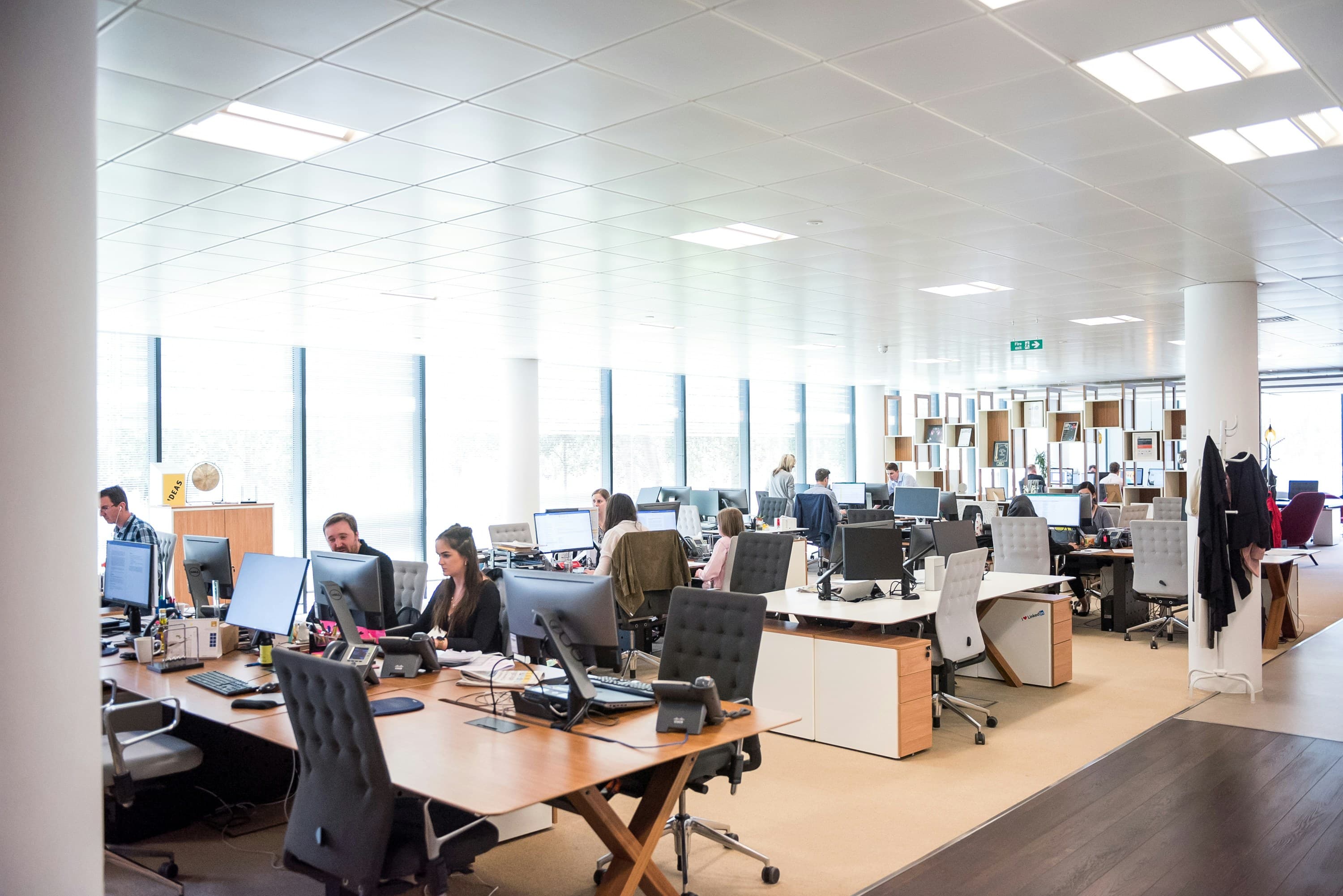
Class A, B, and C office space refer to a standardized grading system used in commercial real estate to classify buildings by quality, amenities, and price. Class A buildings are the newest and most prestigious, typically commanding $60–120+/sqft/year in cities like NYC and SF. Class B offers solid quality at 20–30% lower rents. Class C buildings are older with minimal amenities but the lowest rents. For most early-stage startups, Class B is the practical sweet spot.
What Class A, B, and C Office Space Classifications Actually Mean
The Class A, B, C rating system is commercial real estate shorthand for a building's overall quality tier — encompassing age, construction quality, location, amenities, and management. It's not a government standard or certified designation. It's a widely used industry convention that brokers, landlords, and tenants use to quickly communicate where a building sits in the market.
Think of it like hotel star ratings: the stars aren't issued by a single authority, but everyone roughly agrees what a five-star property means versus a two-star roadside motel. Office building grades work the same way.
Here's the nuance founders most often miss: these classifications are relative to the local market. A Class A building in a secondary city might be Class B by Manhattan standards. When you're searching for office space in SoMa or Flatiron, the class label tells you where a building ranks within that city's inventory, not on some national absolute scale.
What Makes a Building Class A?
Class A office buildings are typically:
- Built within the last 20–30 years (or recently gut-renovated)
- Located in prime, high-visibility locations
- Professionally managed with full-time on-site staff
- Equipped with modern HVAC, high-speed elevators, and advanced building systems
- Featuring high-end lobbies, fitness centers, conference facilities, and sometimes rooftop amenities
- LEED certified or pursuing sustainability credentials
Examples include One World Trade Center in Lower Manhattan and Salesforce Tower in San Francisco's South Beach/Embarcadero corridor — flagship buildings that Fortune 500 companies and late-stage tech firms anchor.
What Makes a Building Class B?
Class B buildings offer solid, functional space without the trophy building premium:
- Typically 15–40 years old, well-maintained
- Good locations, not prime — often one block off the main corridor
- Competent management, standard building systems
- Fewer amenity extras: maybe a lobby café, a basic fitness room, or nothing
- Often in the same neighborhoods as Class A, just in secondary buildings
What Makes a Building Class C?
Class C is the lowest classification:
- Older buildings (often 40+ years) with limited or no renovation
- Dated mechanical systems
- Minimal amenities, basic management
- Often in less central locations or transitional neighborhoods
- The lowest rents in the market
---
How Much Does Each Office Class Cost?
Prices vary a lot by market. Here are realistic ranges for the cities Tandem operates in.
|
Office Class |
NYC ($/sqft/yr) |
SF ($/sqft/yr) |
Boston ($/sqft/yr) |
|---|---|---|---|
|
Class A |
$75–$120+ |
$70–$110+ |
$60–$90+ |
|
Class B |
$50–$75 |
$50–$70 |
$40–$60 |
|
Class C |
$30–$50 |
$30–$50 |
$25–$40 |
These are full-service gross figures where rent includes most operating costs. Modified gross leases in Class B and C buildings can show lower face rents but add back taxes, insurance, and maintenance. Always ask what office lease type a building is quoting before comparing numbers.
A few things that move pricing within each class:
- Floor height: Higher floors in Class A buildings command premiums of 10–20%
- Lease term: Longer commitments (3–5 years) often get better per-sqft rates
- Buildout allowance: Class A landlords with vacancy sometimes offer tenant improvement (TI) allowances — essentially a construction budget — that can offset fit-out costs
- Market conditions: In a soft market, Class A rents compress and the gap between A and B narrows, making Class A more competitive than it looks on paper
---
Which Office Class Is Right for Your Startup?
This is the actual question that matters. Here's a practical framework by stage.
Seed Stage: Does Class C Make Sense?
If you're 3–8 people and runway is your primary constraint, Class C office space — or a well-priced Class B building in a secondary neighborhood — can make real sense. You're not impressing Series A investors with your lobby. You're keeping burn low and proving product-market fit.
In SF, this might mean Mission or Dogpatch. In NYC, it could mean a loft building in DUMBO or a pre-war building in NoMad a few blocks off the main corridor. You can find functional, private office space in these areas without paying the Class A premium, and the character of older buildings often suits early-stage teams better anyway.
The tradeoff: you may sacrafice HVAC, building management may be slower to respond, and on-site amenities will be limited. Budget for those friction points.
Series A: Why Class B Usually Wins
For most Series A companies (15–50 people), Class B is the practical sweet spot. You get a real professional address, reliable building systems, and a space that reads well to recruits and clients — without the trophy building price tag.
In NYC, Class B buildings in Flatiron, Chelsea, or NoMad typically run $55–$70/sqft/year. In SF, Class B space in SoMa or South Fidi runs $50–$65/sqft/year.
When Class A Actually Makes Sense
Class A starts making sense when:
- You're closing enterprise deals where client visits matter
- You're recruiting senior executives who will notice (and care about) the office environment
- You've run the math and the gap between A and B is smaller than expected
- Your brand positioning explicitly benefits from a premium address
Even then, a lot of smart Series B+ companies still choose Class B and put the savings into headcount.
---
How Building Class Shapes Your Lease and Negotiation
The class of a building shapes what you can negotiate and how much leverage you actually have.
Class A leases are typically more complex: longer base terms (3–10 years are common for institutional landlords) and detailed negotiations for buildout. Institutional landlords in Class A buildings have professional leasing teams. The more specific you can be on the work you need done to a space, the easier it will make the process.
Class B leases offer more flexibility. Landlords are often willing to consider 12–18 month terms for smaller tenants.
Class C leases can be the most informal — sometimes a simple gross lease with minimal complexity. Unclear lease language, undefined maintenance responsibilities, and no buildout allowance are common friction points. Read the lease carefully regardless of how casual the landlord seems.
If you're new to leasing office space, you can check out our office leasing guide.
---
How Office Class Affects Recruiting and Team Culture
Building class has a real — if hard to quantify — effect on hiring. A few honest observations.
A Class A address can help close senior hires. If you're recruiting a VP of Sales from a Fortune 500 company, walking them into a trophy building in a prime location signals that you're a real business. This matters more in some industries (fintech, enterprise SaaS) than others (consumer, deep tech).
Class B is neutral-to-positive for most startup hires. Engineers, designers, and product people generally care more about the team and the mission than the lobby. A well-designed Class B space in a walkable neighborhood with good transit beats a generic Class A office in a car-dependent location almost every time.
Class C is a genuine recruiting risk if the building is visibly tired. Slow elevators, unreliable HVAC, and a dingy lobby send signals to candidates — fair or not. If you're in a Class C building, the interior needs to be exceptional to overcome what the building communicates before anyone sits down.
As your team grows and space needs change, revisiting your building class makes sense.
---
For most early-stage startups, the honest answer is Class B in the right neighborhood: private lease, reliable building systems, a term that matches your growth trajectory. It's the best value in the market. Class A is worth considering as you scale and when deals are competitive. Class C can work if the space itself is great and your team doesn't need to impress anyone walking through the door.
Tandem helps startup founders find and lease private office space across NYC, San Francisco, and Boston — sourcing options, handling the offer process, and negotiating on your behalf at no cost to you. Browse private offices on Tandem to see what's available in your market.
Last updated: October 2026